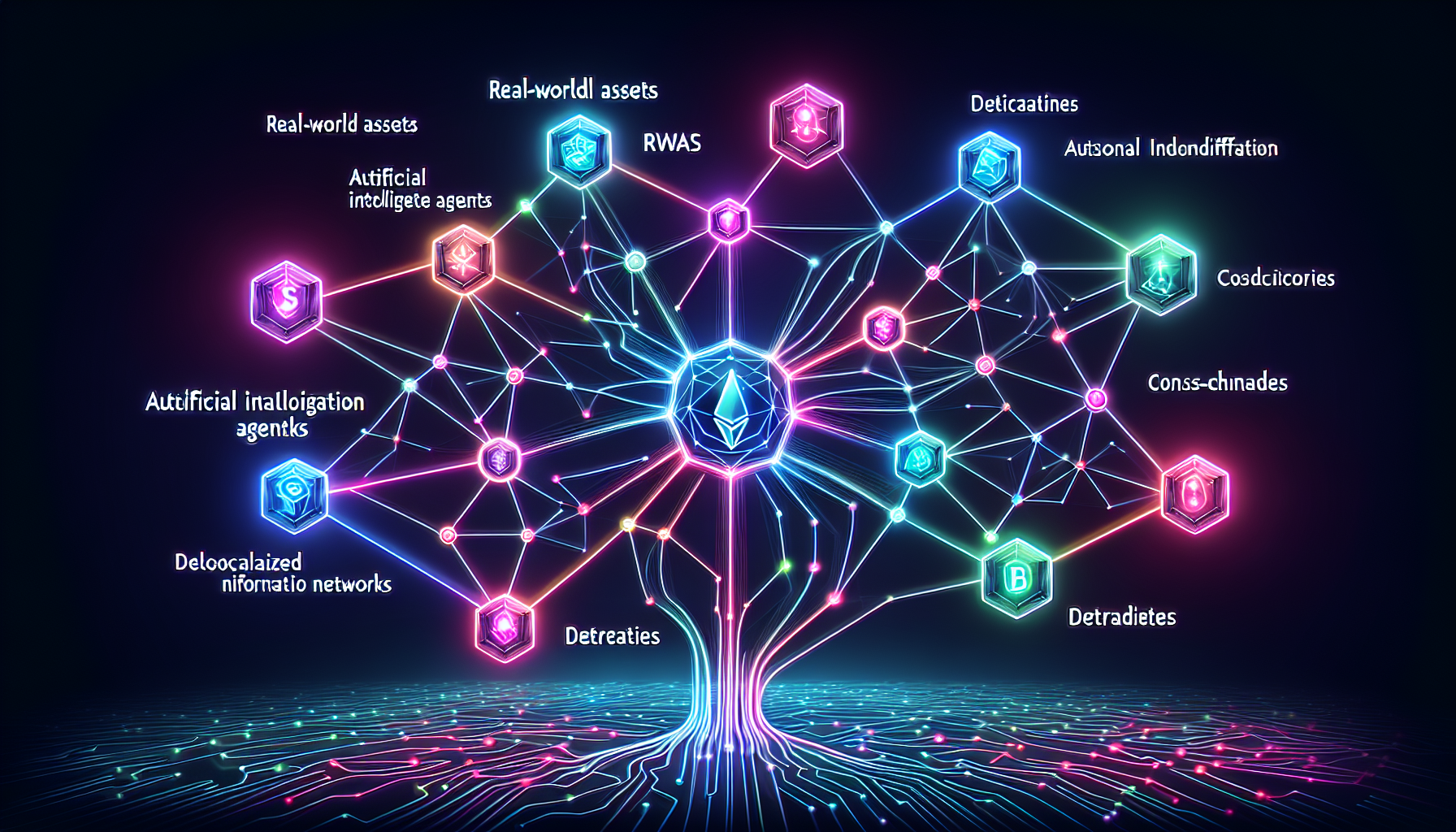
Overview: Why New Solana Protocols Matter in 2026
Solana’s ecosystem in 2026 is not just about memecoins and DEX swaps anymore. New protocols are pushing into real‑world assets (RWAs), AI agents, DePIN, derivatives, and cross‑chain infrastructure. For traders, these aren’t just narratives – they directly affect where liquidity flows, what fees you pay, and what kinds of strategies are possible.
Recent ecosystem reports put Solana DeFi TVL in the mid‑single‑digit billions of dollars and highlight strong DEX spot volumes and growing developer activity.【0search3】 Community dashboards tracking 2026 activity show Solana DeFi TVL around $5.5B+ and Solana processing over $1T in economic activity in Q1 2026.【0reddit25】 Within that context, several new or newly important protocols and primitives have emerged.
This article focuses on what’s actually new or structurally important in 2025–2026, and how those protocols change the game for Solana traders.
1. Real‑World Assets (RWA) on Solana: From Theme to Infrastructure
RWA is no longer just a narrative
By early May 2026, community RWA dashboards report Solana’s RWA ecosystem crossing $2.5B+ in value, hitting new all‑time highs.【0reddit33】 A separate ecosystem analysis in March 2026 estimates roughly $1.7B in RWAs specifically distributed across Solana, positioning it as a leading settlement layer for tokenized treasuries and other off‑chain assets.【0reddit35】
For traders, this matters because:
- RWA collateral can back stablecoins, money markets, and structured products on Solana.
- Yields on RWA‑backed assets can be more stable than purely on‑chain farming.
- Institutional flows (via ETFs and tokenized funds) increasingly route through RWA rails.
Corda protocol: institutional RWA yield on Solana
In December 2025, R3 announced the upcoming Corda protocol launch (via the R3 Foundation), designed as a shared market venue to bring institutional‑grade curated RWA yield to Solana.【0search0】 The idea is to connect TradFi and DeFi markets and make RWA liquidity more discoverable and composable on‑chain.
Why traders should care:
- Expect more RWA‑backed yield products (treasuries, credit products) denominated in stablecoins on Solana.
- RWA venues tend to attract stickier, longer‑term capital, which can stabilize liquidity on major DEX pairs.
- If you trade majors like SOL, JUP, RAY, and large caps, watch how their lending and perp markets integrate RWA‑backed collateral – this can change funding rates and borrow costs.
Practical tips:
- Track RWA metrics on dashboards like RWA.xyz and ecosystem reports cited by the Solana community.【0reddit35】
- When new RWA vaults or tokens list on Solana DEXes (Raydium, Meteora, Jupiter routed), check:
- Collateral quality (e.g., short‑term treasuries vs. exotic credit)
- Redemption mechanics and counterparties
- On‑chain vs. off‑chain legal claims
2. AI Agents and On‑Chain Identity: ME Protocol on Solana
A recent Solana DeFi weekly roundup highlighted ME Protocol on Solana, introduced by HYRE and powered by Metaplex, giving AI agents their own on‑chain identity and native token structure.【0reddit23】
What ME Protocol actually enables
ME Protocol is designed so that:
- AI agents can have persistent on‑chain identities (think: wallets + metadata + behavior history).
- Agents can issue or interact with native tokens tied to their activity.
- Protocols can build agent‑aware markets – for example, special fee tiers, reputation‑based access, or automated strategies.
Why this matters for traders
- More sophisticated automation
AI agents with native identity and tokenization can: - Run on‑chain trading strategies (market making, arbitrage, rebalancing) with transparent histories.
-
Coordinate across multiple protocols (Jupiter, Drift, Kamino, Raydium) using a single agent identity.
-
New token types and markets
Agent‑native tokens could trade on Solana DEXes, representing: - Revenue shares or performance fees of a specific AI strategy
-
Access rights to a bot’s signals or execution
-
Reputation‑based order flow
Protocols may differentiate between: - Reputable agents (long‑lived, transparent strategies)
- Sybil or spam bots
How to trade around this trend:
- When new AI‑agent‑linked tokens launch, check:
- Whether the agent has verifiable on‑chain history.
- If the token has clear economic rights (fee share, governance, or just meme).
- Use explorers like Solscan or Helius‑powered dashboards to inspect:
- Contract deployments
- Agent transaction patterns
3. DePIN on Solana: Wireless, Compute, and Physical Networks
Solana has become a major hub for DePIN (decentralized physical infrastructure). Syndica’s DePIN deep‑dive reports show:
- By mid‑2025, Solana DePIN protocols with over 1M devices were still adding thousands of new devices monthly.【0search22】
- A January 2026 DePIN update notes wireless protocols’ data offloading hitting new all‑time highs, indicating real usage growth.【0reddit24】
Why DePIN protocols matter to traders
DePIN tokens are not just narrative plays; their fundamentals are tied to real‑world usage metrics:
- Number of active devices or nodes
- Data throughput or compute usage
- Revenue from actual customers (e.g., bandwidth buyers, compute renters)
As these metrics grow, DePIN tokens can:
- Become major trading pairs on Solana DEXes.
- Offer yield opportunities via staking or revenue‑sharing mechanisms.
How to evaluate new DePIN protocols:
- Look for transparent metrics in dashboards and reports (e.g., Syndica’s DePIN reports).【0search22】【0reddit24】
- Check if token incentives are aligned with real usage (e.g., rewards tied to verified data or compute, not just uptime).
- On DEXes like Raydium or Meteora, compare:
- Liquidity depth and slippage
- Emissions vs. organic volume
4. Derivatives and Advanced Trading Infrastructure
Solana’s derivatives and execution layer have evolved significantly, and new protocols are targeting low‑latency, MEV‑resistant trading.
Bulk Trade: high‑performance derivatives on Solana
Bulk Trade, introduced in 2025, is positioned as a high‑performance derivatives trading infrastructure on Solana, emphasizing low latency, deep liquidity, and resistance to MEV.【0search15】 A public testnet was scheduled for late 2025 with mainnet to follow.【0search15】
If Bulk Trade and similar protocols gain traction, traders can expect:
- Tighter spreads and deeper books on perps and options.
- More sophisticated order types and routing logic.
- Potential integration with Jupiter for routing between spot and derivatives venues.
Drift, Kamino, and structured products
Recent ecosystem roundups highlight:
- Drift Protocol launching a mobile app and expanding its product set.【0reddit19】
- Funding and recovery plans (e.g., a $150M+ recovery plan involving Tether and partners) aimed at rebuilding liquidity and user trust.【0reddit25】
- Kamino and others using stablecoins like PYUSD in structured yield strategies and leveraged products.【0reddit36】
Trading implications:
- Perp markets on Solana are increasingly institutional‑grade in terms of UI, risk engines, and liquidity.
- New protocols like Bulk Trade can become execution venues where professional market makers operate, improving fills for retail traders.
How to adapt as a trader:
- Compare funding rates and open interest across Solana perp venues (Drift, other emerging derivatives protocols) using analytics tools like Coinglass or protocol dashboards.
- When a new derivatives protocol launches:
- Start with small size to test execution quality.
- Monitor liquidation mechanics and oracle sources.
5. Cross‑Chain Infrastructure: IBC, ZK Coprocessors, and Data Layers
IBC and Cosmos–Solana connectivity
A late‑2025 discussion in the Solana community highlighted Nolus Protocol (a Cosmos DeFi appchain) launching on Solana in 2026 via IBC, with both chains maintaining light clients of each other and verifying state transitions cryptographically.【0reddit31】
This type of integration means:
- DeFi protocols on Solana can natively access Cosmos liquidity, and vice versa.
- Cross‑chain strategies (e.g., borrowing on one chain, LPing on another) become more seamless.
For traders, this opens up:
- Arbitrage opportunities between Solana and Cosmos DEXes.
- New structured products that blend Solana yield with Cosmos collateral.
ZK coprocessor bridges and private execution
Research work on a ZK coprocessor bridge between Solana and Aztec via Wormhole describes a system where:
- A Solana program posts messages to Wormhole with explicit finality.
- An EVM portal and Aztec contracts enable private consumption of those messages.
- Off‑chain relayers ferry VAAs between chains.【0academia30】
While this is still research‑grade, it points toward:
- Private execution environments that still settle on Solana.
- Cross‑chain strategies where some logic is hidden (e.g., order flow, strategy parameters) but settlement remains transparent.
How to position for cross‑chain infra:
- Track which Solana DEXes and lending markets integrate IBC or Wormhole‑based flows.
- When new cross‑chain tokens list on Solana, check:
- Bridge contracts (Wormhole, IBC, or others)
- Finality guarantees and replay protection
6. Stablecoin and Payments Infrastructure
Solana’s role in payments and stablecoins has strengthened:
- Cash App is rolling out USDC payments in early 2026, powered by Solana, giving tens of millions of users access to stablecoin transfers.【0reddit27】
- Ecosystem reports note strong growth in stablecoins like PYUSD on Solana, driven by incentives and attractive yields across Drift, Kamino, and leading DEXes.【0reddit36】
Why this matters for traders:
- More retail on‑ramps into USDC/PYUSD on Solana = deeper stablecoin liquidity on DEXes.
- Payment flows can create baseline demand for stablecoin swaps and hedging.
Practical angles:
- Watch USDC and PYUSD pools on Raydium, Meteora, and other AMMs for:
- Liquidity depth
- Fee APR
- Impermanent loss vs. yield
- For directional trading, stablecoin depth often dictates how much size you can move without major slippage.
7. How to Keep Up With New Solana Protocols (Without Getting Wrecked)
Given the pace of launches, you need a process to filter signal from noise.
1. Start with ecosystem‑level reports
Use:
- Syndica ecosystem and DeFi/DePIN reports for macro trends and protocol lists.【0search22】【0reddit24】
- Blockworks and similar research reports for DEX volume, TVL, and token holder distributions.【0search26】
- Community roundups like the Jupiter DeFi Weekly posts for week‑by‑week protocol updates.【0reddit23】【0reddit25】
These give you:
- Which sectors are actually growing (RWAs, DePIN, derivatives, AI agents).
- Which protocols are gaining or losing share.
2. Then drill down with Solana‑native tools
For any new protocol you’re considering trading around:
- Solscan / Solana Explorer / Helius APIs
- Verify program addresses and deployment dates.
-
Check upgrade authority and admin controls.
-
Birdeye / DexScreener
-
Inspect liquidity depth, volume, and holder distribution for the protocol’s token.
-
Protocol docs and audits
- Confirm how funds are custodied (program‑controlled vs. multisig vs. off‑chain).
3. Risk‑manage new protocol exposure
- Size positions assuming smart contract risk is non‑zero, especially for:
- New derivatives engines
- Cross‑chain bridges
- RWA custodial structures
- Prefer protocols with:
- Transparent teams and documentation
- Clear incident response and recovery plans (Drift’s recovery plan is a good example of post‑incident transparency).【0reddit25】
Conclusion: Focus on Structural, Not Just Hype, Innovation
The most important new Solana protocols in 2025–2026 are not just another DEX or another meme launchpad. The real structural shifts are happening in:
- RWAs and institutional yield (Corda protocol, growing RWA TVL)
- AI agents and identity (ME Protocol and agent‑native tokens)
- DePIN (wireless and physical networks with real usage metrics)
- Derivatives and execution layers (Bulk Trade, Drift’s evolution, Kamino strategies)
- Cross‑chain infra (IBC connections, ZK coprocessor bridges via Wormhole)
- Payments and stablecoins (USDC via Cash App, PYUSD growth)
For traders, the edge comes from understanding how these protocols change liquidity, fees, and risk, not just buying whatever is new. Use ecosystem reports, explorers, and analytics tools to verify claims, and always size your exposure with protocol risk in mind.
Staying disciplined about data, not narratives, is how you survive – and potentially thrive – in the next phase of Solana’s growth.